The New Human-Computer Interaction Revolution: Natural Language Manipulates Everything
On May 14, 2014, I wrote an article titled "The Future of the Internet: The age of sound and the age of body sensation. In the article, I divided several eras according to the dimension of human-computer interaction, starting from the graphical interface:
First era: Click era.
The second era: The Age of Touch.
The third era: Voice era (Voice era).
The fourth era: Motion era (somatosensory era).
It was a prophetic article, because at that time, the third age had not yet arrived, let alone the fourth.
With Siri and slightly smart speaker, I thought the third era was about to begin. However, the wheels of history roll forward, and technology always develops beyond our imagination. Looking back now, it was just a prologue, or foreplay.
02
Time passes, and I think the third era is really coming.
The opening of this era, thanks to the emergence of advanced technologies such as ChatGPT, marks the arrival of the big model revolution, which will enable us to achieve a qualitative leap in the way we communicate with machines.
Based on this, I correct the third era to the Chat era (natural language era).
03
Since the first computer, the way humans communicate with machines has changed dramatically.
In the early days, we "taught" computers to perform tasks through a complex set of codes and commands, which required specialized skills and a deep knowledge background. With the advent of graphical user interfaces, computers have become more accessible, but users still need to click and type to interact with machines.
However, with the popularity of smart phones and the development of touch technology, the era of Touch has arrived. People began to get used to swiping their fingers across the screen, and this intuitive way of interacting greatly increased efficiency, while also allowing more non-technical users to easily use complex technology products.
Subsequently, with the emergence of voice assistants such as Siri and Alexa, people are full of expectations for the Voice era. These first generation intelligent assistants can respond to simple voice commands to help users set reminders, play music or provide weather forecasts. However, they have very limited abilities to understand complex instructions or handle multiple rounds of conversation, let alone understand the user's emotions and context.
04
Now, with the rise of large language models such as ChatGPT, we are finally in the era of real Chat. These models use billions of parameters and are able to understand and generate natural language text, achieving conversational capabilities comparable to those of humans. This isn't just a technological leap, it heralds a fundamental change in the way humans interact.
We are at another historic turning point-natural language will be the key to everything, opening the door to the Chat era.
The emergence of ChatGPT marks a huge leap forward in the field of natural language processing (NLP). As an advanced AI model for language understanding, ChatGPT not only understands human language, but also generates coherent, logical responses that make conversation with a machine as natural as communicating with another human. This advance is not only a technological leap, but also a fundamental shift in the way humans interact.
In this age of natural language, people no longer need complex commands or multi-step operations to communicate with machines. Instead, all interaction can be achieved in the most natural way: language. Whether it is text or spoken language, the machine can quickly and accurately understand and respond accordingly.
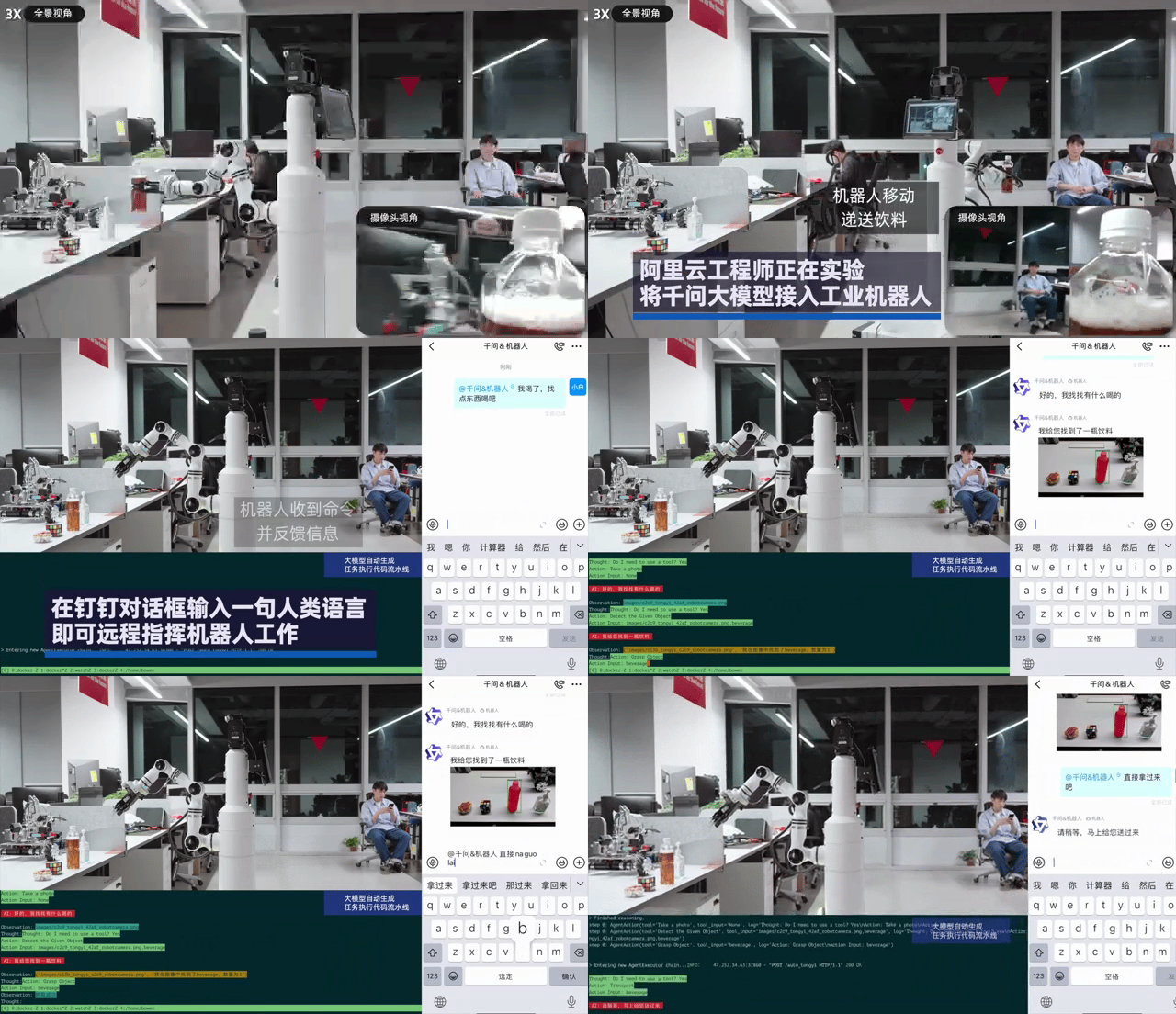
This shift in human-computer interaction is revolutionary. First, it dramatically lowers the barriers to technology adoption. In the past, people had to learn and adapt to how machines operated, but in the age of natural language, all that would no longer exist. Machines need to adapt to human language habits, which means that people of all ages and technical proficiency can easily communicate with machines.
Second, the application scenarios of natural language processing technology are almost everywhere. From smart homes and online customer service, to medical consulting and educational counseling, to complex business analytics and technology development, natural language manipulation has a wide range. Machines can not only answer questions, but also engage in dialogue, provide solutions, and even participate in creative and decision-making processes.
05
While we look forward to this new era, natural language processing also faces enormous challenges.
First of all, language itself is extremely complex and full of ambiguity. Machines must be able to understand nuances of language in different cultural and social contexts, including but not limited to slang, puns, humor, and sarcasm.
Second, as technology spreads, data privacy and security issues become more important. We need to ensure that sensitive personal and social information is properly protected while enjoying the benefits of technology. This requires not only technological innovation, but also in-depth discussion and consensus on privacy and data governance across society.
In addition, the popularity and advancement of natural language processing technology has brought us unprecedented opportunities. In today's globalized world, language differences and cultural barriers used to be major obstacles to communication. Now, with advanced real-time translation systems and cross-culturally adaptive learning, we have the potential to remove these barriers and achieve true global connectivity and knowledge sharing.
06
Led by ChatGPT, the Big Model Revolution is changing the world in ways we can't imagine.
In education, personalized AI teaching assistants can provide customized guidance based on each student's learning style and speed, making educational resources more equitable. In the field of health care, AI assistants can not only provide doctors with second opinions, but also assist doctors in making more accurate diagnoses and treatment plans by analyzing a large number of medical records and literature.
More broadly, the application of natural language processing technology is reaching into every corner of society. Governments, businesses, and nonprofits are beginning to rely on these advanced tools for data analysis, decision support, and even the planning and implementation of innovative projects. We can foresee that as these technologies continue to mature and optimize, more traditional fields will be completely changed.
07
Looking ahead, we can foresee that with the further development of virtual reality (VR) and augmented reality (AR) technologies, natural language will no longer be just a tool for us to interact with the digital world, but a bridge between the real world and the virtual world.
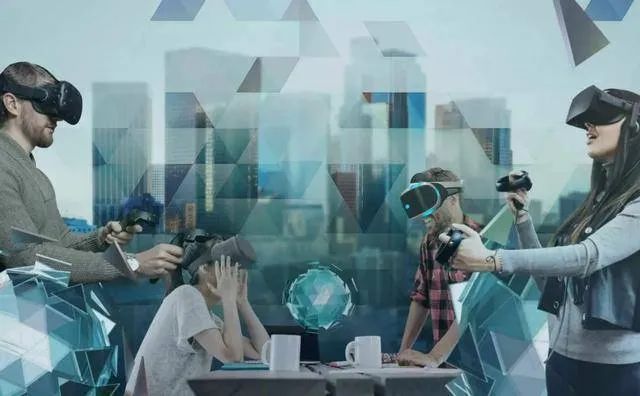
We will be able to control objects and perform tasks in virtual worlds through language, which will open up new dimensions of interaction and revolutionize education, work, entertainment and even social interaction.
In this new era of infinite possibilities, we will also face unprecedented challenges. Issues such as ethics of technology, data privacy, changes in employment structure, and social responsibility will become more prominent. We need to think about how to build a fair, ethical and sustainable future society while pursuing technological progress.
08
The Chat era is not just a technological advance, it is a fundamental shift in the relationship between humans and machines. In this age, machines are no longer our tools, but our partners, our extensions. We need to be prepared for this change, not only to address the technological and ethical challenges that come with it, but also to learn how to find ways to coexist with machines in this new era.
As natural language becomes the key to everything, we are entering a new era of human-computer interaction revolution. In this age, it is not we who adapt to machines, but machines who adapt to us. This is a new world full of infinite possibilities, let us embark on this journey together and explore the unknown future.
09
Finally, I revised the theory of human-computer interaction from several eras, beginning with graphical interfaces, as follows:
First era: Click era.
The second era: The Age of Touch.
The third era: Chat era (natural language era).

Comments
Post a Comment